Approach study, Lower North Shore
Whole-Home Technology & Lighting Control, Mosman
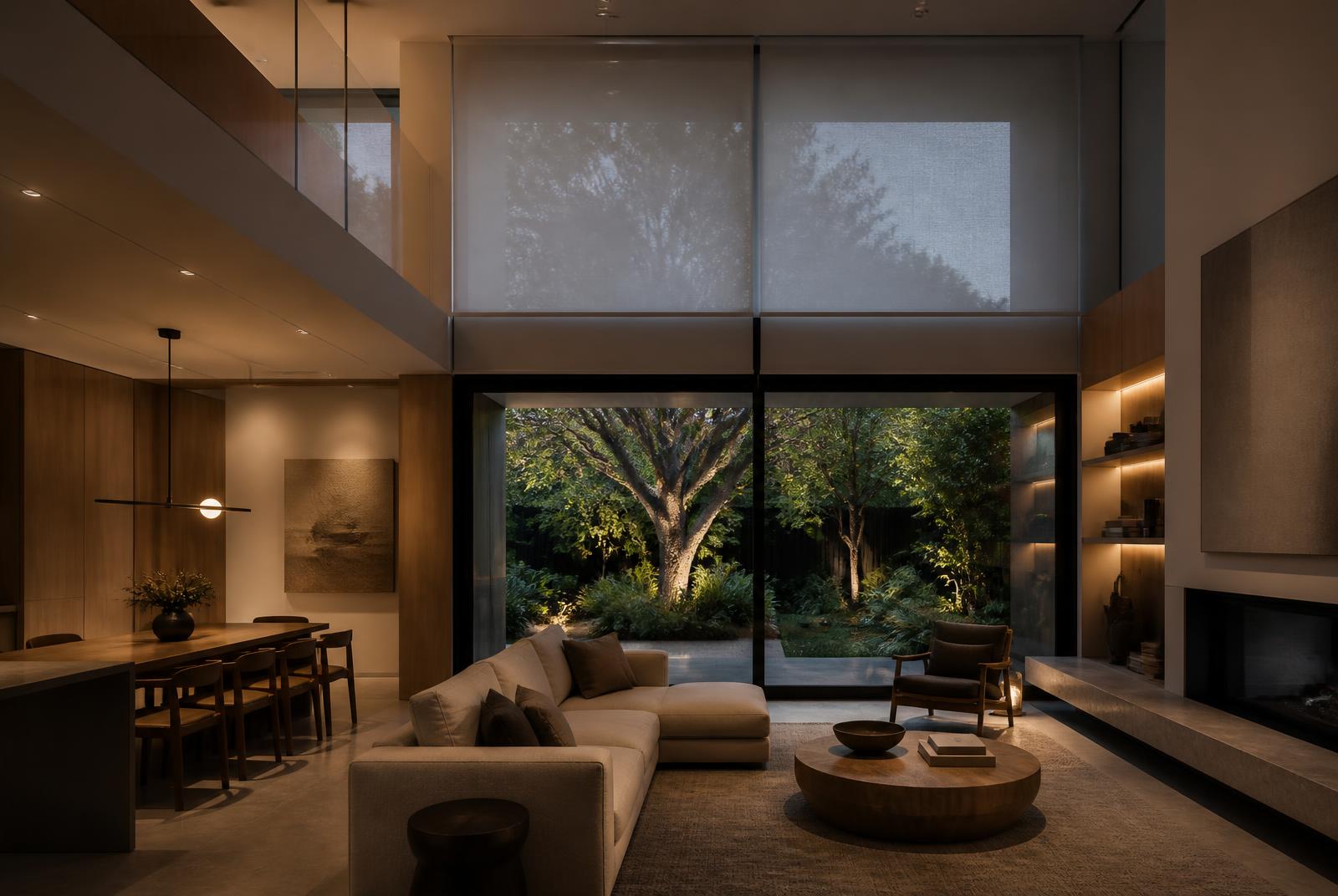
Approach study: describes how we deliver this type of project, not a specific client home. Imagery is representative.
A family house is judged on ordinary mornings, not on demonstrations. Here the brief was restraint: fewer switches, blinds and lighting that move together, music where it is wanted, and a network nobody has to think about.
Project highlights
What defines the work.
Lighting scenes, motorised blinds, audio, televisions and networking brought under one calm control layer for a family home on the lower North Shore.
01
Scenes instead of switches
Wall plates reduced to a handful of engraved keypads, each carrying the scenes that room actually needs.
02
Shading and light as one
Motorised blinds coordinated with lighting and sun position, protecting interiors and glare-sensitive rooms.
03
Audio and television, simplified
Distributed audio and displays share one control language, so guests can use the house unaided.
04
A network that holds
Cabled backbone with correctly placed access points, sized for a household of streaming, calls and study.
Technology included
The systems, and what each one does.
- Automation
- Control4 running lighting, shading, audio, climate and entertainment together.
- Lighting
- Scene-based control with keypads engraved per room and dawn/dusk timing.
- Shading
- Motorised sheer and blockout blinds on shared triggers with lighting scenes.
- Audio
- Multi-room audio through in-ceiling speakers across living, kitchen and bedrooms.
- Video
- Televisions integrated into joinery with cabling and sources resolved centrally.
- Network
- Structured cabling, managed switching and wireless coverage to every level and outdoors.
Design approach
How it is resolved.
Decide what each room needs to do
We start by writing down how a room is used across a day, then design the smallest set of controls that supports it. A kitchen needs bright task light in the morning and a soft evening setting; a stair needs a low path at night.
That discipline is what keeps a wall to two or three buttons instead of six switches nobody can read in the dark.
Shading is part of the lighting design
Glass is the largest light source in a modern home. Treating blinds as a separate purchase produces rooms that either overheat or feel closed off, so shading is designed with the lighting and the climate zones.
Sheers hold the view and cut glare during the day; blockout closes bedrooms at night. Both move on schedules and scenes rather than on their own remotes.
Entertainment without a drawer of remotes
Sources are consolidated and distributed, displays are coordinated with joinery, and the same keypad, touchscreen or phone that dims a light selects a source.
Reliability comes from the layer underneath: a cabled backbone, access points positioned on plan rather than guessed, and equipment kept cool and accessible.
The result
How the house behaves.
The aim is a house that feels quieter. Fewer plates on the wall, blinds and lighting that behave sensibly on their own, music available in a press, and no household argument about which remote does what.
The equipment is documented and reachable, so a change of streaming service or a new display is a small job rather than a project.
Planning something similar? Read how we approach home automation in Sydney, our work as a Control4 installer, smart lighting design and ongoing Control4 servicing, or arrange a consultation.
Discuss your project
Talk to us about your home.
A complimentary consultation anywhere in Sydney, for new builds, renovations and inherited Control4 systems.
Related services
- Smart Lighting Sydney
Scenes, keypads, no clutter
- Motorised Blinds
Shading that moves with the sun
- Multi-Room Audio & Video
Music and picture in every zone
- Home Wi-Fi Sydney
Coverage designed on plan
- Climate & Comfort
Zones that follow the household
- Control4 Sydney
One interface for the house