You should be able to forget it exists
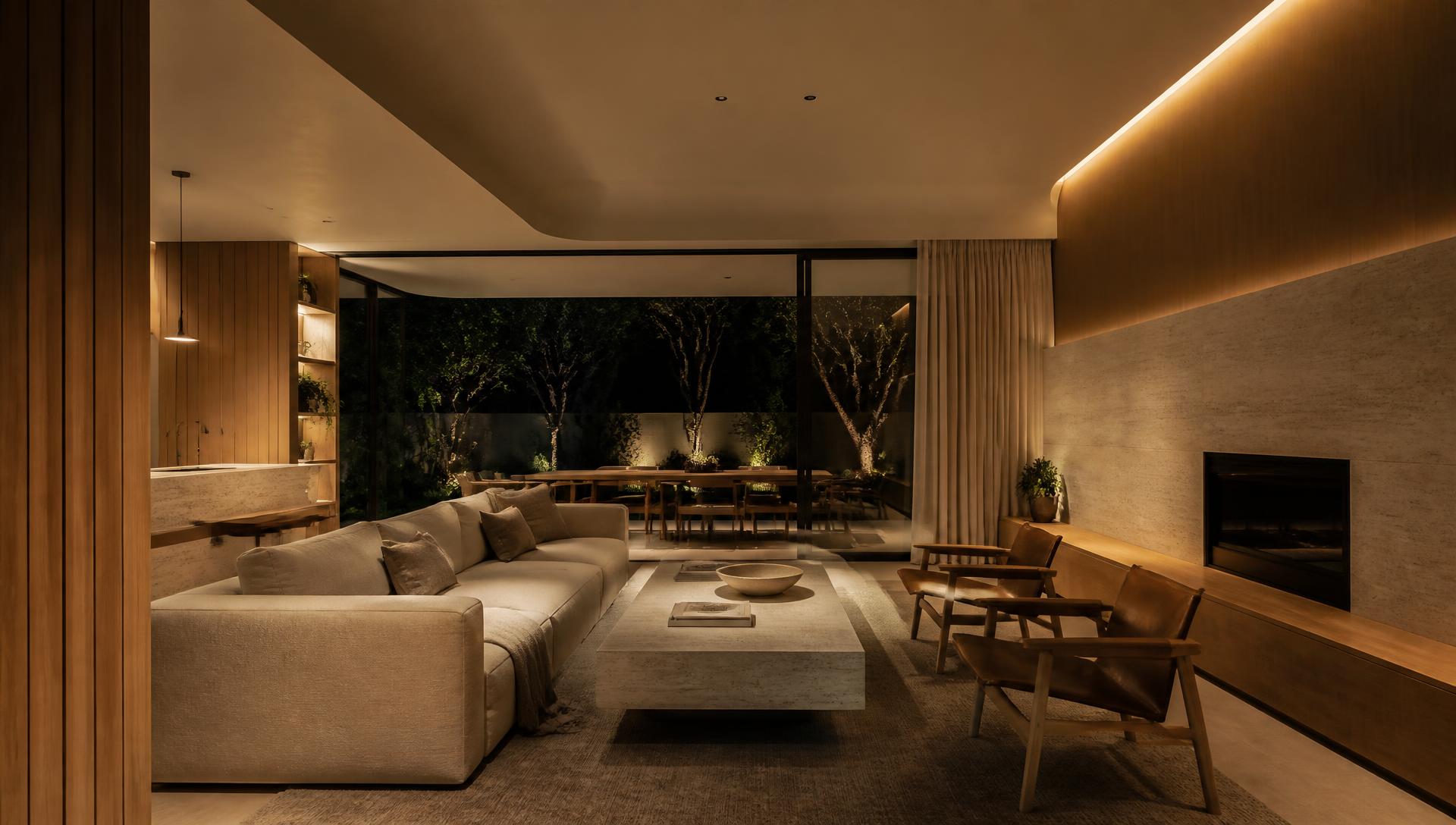
The measure of a luxury smart home in Sydney is not how much it can do. It is how rarely anyone in the household has to think about it. Lights that are already right when you walk in, a room that cools before it becomes uncomfortable, music that starts on the first press: none of it announces itself.
That outcome is a design result, not a hardware result. Two homes running the same Control4 processors and the same lighting hardware can feel completely different depending on how much thinking went in before installation.
Fewer controls, better placed
The most common failure in an expensive home is too much control. Six switch plates by a doorway, three remotes in a drawer, an app for each brand. The household reverts to the simplest thing that works and the rest is abandoned.
We work the other way: decide what each room needs to do across a day, then design the smallest set of controls that covers it. Usually that is two or three engraved buttons on a single keypad, with touchscreens and the app carrying the exceptions. Placement matters as much as count, a keypad belongs where your hand already goes.
Scenes are set in the finished room
Lighting levels cannot be chosen from a schedule. Stone reflects, dark timber absorbs, sheer curtains change everything, and a level that looked correct on a bare plasterboard wall will be wrong once the room is furnished.
So commissioning happens after the interiors are in: in the room, at the right time of day, with the household present. Addressable platforms make this practical, which is one reason we favour DALI lighting control in larger homes, each luminaire can be re-balanced in software instead of rewired.
The unglamorous layers do the work
Two things decide whether a house feels effortless in year three: the network and the rack. A cabled backbone with access points positioned on plan, and equipment that is labelled, ventilated and reachable.
Neither is visible to a visitor, and both are where cost gets cut first. If you only protect one part of a technology budget, protect these.
What to ask for at the start
Ask for documentation: device positions on plan, a cable schedule, a rack elevation, a keypad engraving schedule. Ask who returns to tune the house after handover, and what support looks like in two years.
If you are planning a new build or renovation, our approach to that process is set out in our home automation and smart lighting pages, and you can see how it plays out across a whole house in the Double Bay case study.